
You Got to Know How to Hold ‘em: Exotic Animal Restraint
1.0 CE Credit Hour / Katrina Lafferty, BFA, RLAT, CVT, VTS (Anestheisa/Analgesia)

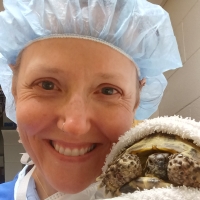
Katrina Lafferty, BFA, RLAT, CVT, VTS (Anestheisa/Analgesia)
Katrina Lafferty graduated from DePaul University in Chicago, IL with her BFA in Theatre. She realized she had missed the mark on career choices and returned to school to graduate with her degree in Veterinary Technology. She went on to earn her Veterinary Technician Specialty in Anesthesia and Analgesia and her registered lab animal technician certification. Kate has worked at the University of Wisconsin-Madison since 2005. She was a senior anesthesia nurse in the Anesthesia and Pain Management Department at the school of veterinary medicine until 2016. She moved to a position as head veterinary nurse in the anesthesia and surgery department at the University of Wisconsin National Primate Research Center. After nearly 5 years working with primarily rhesus macaques and marmosets, in 2021 she returned to the anesthesia department at the school of veterinary medicine. In January 2024 she also started moonlighting part-time at the Henry Vilas Zoo in Madison. Katrina is extremely involved in the education of the veterinary community and has written many articles and book chapters. She has presented at a numerous of continuing education sessions on an international level and loves all aspects of teaching. Katrina has anesthetized everything from a 2 day old calf, to a 4 week old kitten, to a 60 year old tortoise, not to mention a veritable menagerie of other species. Her particular anesthetic passion is all things exotic animal. Her passion is anesthesia and pain management, particularly in exotic species.
Overview:
Lecture covers restraint techniques for rabbits, ferrets, birds, rodents, and reptiles. Discusses how to deal with calm, feisty, and fractious animals, while keeping both the patient and the restrainer safe. Also deals with restraint techniques for various procedures such as venipuncture, injections, and oral administration of medications.
Learning Objectives:
- Understand Species-Specific Restraint Techniques
- Identify and demonstrate safe and humane restraint techniques for exotic animals, including rabbits, ferrets, birds, rodents, reptiles, and amphibians.
- Prevent Injury to Animals and Handlers
- Recognize the potential risks to both exotic animals and handlers during restraint and learn methods to minimize these risks.
- Apply Proper Restraint Tools
- Utilize appropriate tools such as towels, gloves, and burrito wraps to handle exotic species effectively without causing harm.
- Recognize Stress Indicators
- Identify signs of stress or distress in exotic animals during handling and adjust restraint techniques accordingly to ensure patient welfare.
- Adapt Techniques for Fragile or Aggressive Species
- Understand special considerations for fragile species like amphibians and reptiles or aggressive species like snapping turtles and venomous snakes.
This course is RACE-approved for 1.0 continuing education credits hours in jurisdictions that accept RACE-approval.
