
Prepare for Takeoff: Creating a Personalized Anesthetic Plan for Every Patient
1.0 CE Credit Hour / Kate Lafferty, BFA, RLAT, CVT, VTS (Anesthesia & Analgesia)

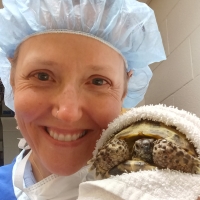
Kate Lafferty, BFA, RLAT, CVT, VTS (Anesthesia & Analgesia)
University of Wisconsin-Madison
Katrina Lafferty graduated from DePaul University in Chicago, IL with her BFA in Theatre. She realized she had missed the mark on career choices and returned to school to graduate with her degree in Veterinary Technology. She went on to earn her Veterinary Technician Specialty in Anesthesia and Analgesia and her registered lab animal technician certification. Kate has worked at the University of Wisconsin-Madison since 2005. She was a senior anesthesia nurse in the Anesthesia and Pain Management Department at the school of veterinary medicine until 2016. She moved to a position as head veterinary nurse in the anesthesia and surgery department at the University of Wisconsin National Primate Research Center. After nearly 5 years working with primarily rhesus macaques and marmosets, in 2021 she returned to the anesthesia department at the school of veterinary medicine. In January 2024 she also started moonlighting part-time at the Henry Vilas Zoo in Madison. Katrina is extremely involved in the education of the veterinary community and has written many articles and book chapters. She has presented at a numerous of continuing education sessions on an international level and loves all aspects of teaching. Katrina has anesthetized everything from a 2 day old calf, to a 4 week old kitten, to a 60 year old tortoise, not to mention a veritable menagerie of other species. Her particular anesthetic passion is all things exotic animal. Her passion is anesthesia and pain management, particularly in exotic species.
Overview:
Many times, the focal point of anesthesia is the time after the patient has been induced and is under general anesthesia. However, in order to have an anesthetic event that is as smooth and safe as possible, every patient needs a personalized anesthetic plan that takes into consideration a variety of factors. The 2020 AAHA Anesthesia Guidelines include recommendations for creating a comprehensive anesthetic plan that covers premedication, induction and intubation, anesthetic and analgesic maintenance, physiologic monitoring and recovery from anesthesia. Each of these considerations should be examined as part of the preparative phase. Patient signalment, history (including current and past medications, comorbidities), complete physical examination, multi-faceted diagnostic analysis, type and length of procedure, analgesic requirements, monitoring needs and challenges, and recovery concerns should all be considered. The goal of the anesthetic plan and peri-anesthetic period should be to minimize stress (for patient and anesthetist), provide appropriate monitoring and analgesia, and anticipate anesthetic complications at all stages.
Learning Objectives:
- Understand and utilize 2020 AAHA Anesthesia Guidelines as applicable to patient preparation and safety.
- Understand necessary information required in the pre-operative phase including physical exam, ASA status, co-morbidities, client communication, and consent forms.
- Understand and utilize pre-anesthetic work up forms to create individualized patient anesthetic and monitoring plans.
This course is RACE-approved for 1.0 continuing education credits hours in jurisdictions that accept RACE-approval.
